

Syed Ali
Key Summary
A walker with wheels helps seniors and individuals with mobility challenges move safely and independently. Proper use involves adjusting the height correctly, stepping smoothly, and using the brake effectively. Choosing the right type, two-wheel, four-wheel, or heavy-duty, depends on individual needs and terrain. Accessories like seats and baskets enhance comfort and convenience.
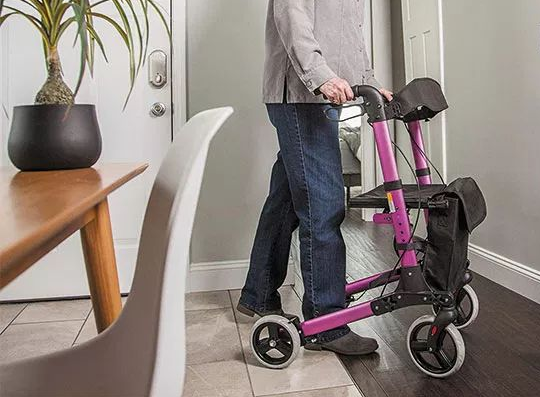
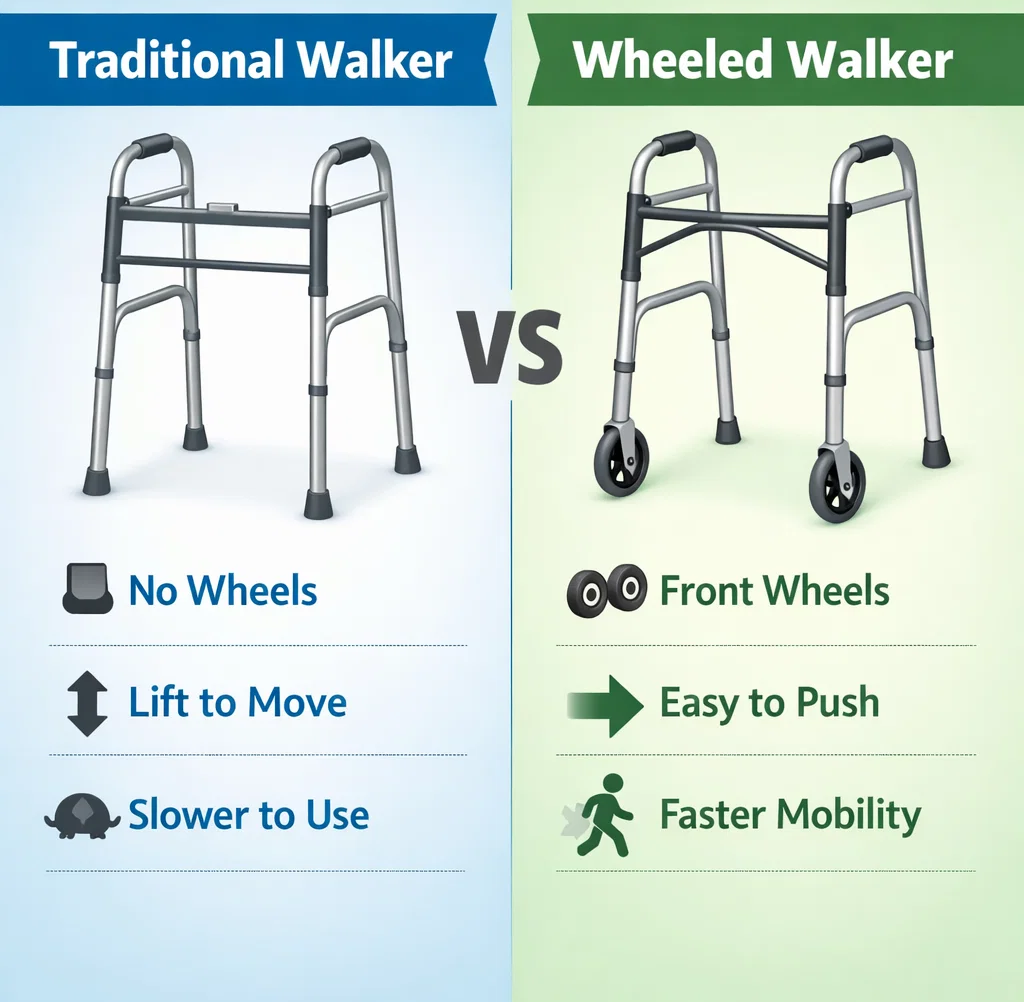
As we age or recover from injuries, maintaining balance and mobility becomes critical for independence. A walker with wheels, also known as a rolling walker, is designed to provide support while allowing smoother movement than a standard walker. Unlike a traditional walker that requires lifting with each step, a wheeled walker glides forward with minimal effort, thereby reducing strain on the arms and wrists.
Walkers with wheels are ideal for seniors, individuals recovering from surgery, or anyone with limited strength or mobility. They promote safer walking, improve confidence, and can prevent falls, a leading cause of injury among older adults.
Table of Contents
Benefits of Using a Walker with Wheels
Using a walker with wheels offers several advantages:
- Enhanced Mobility: Wheels allow smooth gliding across floors, reducing effort and fatigue.
- Stability: Most wheel walkers have brakes and wide bases for balance support.
- Independence: Users can move more freely without constant assistance.
- Versatility: Suitable for both indoor and outdoor use with various wheel sizes.
- Comfort: Many walkers include padded seats for resting, storage baskets, and adjustable handles.
|
Featured
|
Standard Walker
|
Walker with Wheels
|
|
|---|---|---|---|
|
Lifting Required
|
Yes
|
No (glides forward)
|
|
|
Stability
|
High
|
High (with brakes)
|
|
|
Ease of Use
|
Moderate
|
Easy
|
|
|
Indoor/Outdoor Use
|
Indoor only
|
Both
|
|
|
Seat & Storage Availability
|
Rare
|
Common
|
|
Types of Walkers with Wheels
Walkers with wheels come in different configurations to meet varied needs:
- Two-Wheel Walkers: Front wheels glide forward; rear legs have rubber tips for stability. Ideal for indoor use.
- Four-Wheel Walkers (Rollators): Include brakes, seats, and baskets for maximum comfort. Suitable for longer distances.
- Heavy-Duty Walkers: Designed for bariatric users or those needing extra stability, often with larger wheels for outdoor use.
Each type has unique advantages, and the choice depends on mobility level, weight, and intended use.
Step-by-Step Guide
Proper use of a wheeled walker ensures safety and efficiency. Follow these steps:
1. Adjust the Height
- Ensure the walker’s handles are at wrist level when standing straight.
- Proper height reduces strain on the shoulders and back.
2. Position the Walker
- Stand inside the walker, feet shoulder-width apart.
- Keep your back straight and shoulders relaxed.
3. Move the Walker Forward
- Push the walker gently ahead 12–18 inches.
- Ensure all four wheels are on the ground for stability.
4. Step Forward
- Step forward with your weaker leg first, followed by the stronger leg.
- Keep a comfortable pace; avoid rushing.
5. Use Brakes Properly (if present)
- If stopping, gently squeeze the hand brakes to stabilize the walker.
- Some walkers have a brake-lock system; engage it before sitting.
6. Sitting and Standing
- When using a walker with a seat, make sure the brakes are engaged.
- Sit slowly, and use the walker’s handles for support while standing.
Common Mistakes to Avoid
- Overreaching: Stretching too far can cause imbalance.
- Incorrect handle height: Leads to poor posture and discomfort.
- Rushing: Moving too quickly increases fall risk.
- Not using brakes: Forgetting brakes can lead to slips on slopes or uneven surfaces.
Safety Tips for Using a Walker with Wheels
- Wear non-slip shoes to reduce the risk of falls.
- Avoid uneven or slippery surfaces whenever possible.
- Keep the home well-lit and free of clutter.
- Regularly check wheels and brakes for wear and tear.
- Always use the walker as instructed by a healthcare professional.
Additional Accessories for Wheel Walkers
Enhance convenience and safety with:
- Storage baskets or pouches: Carry personal items hands-free.
- Cup holders: Keep water or beverages within reach.
- Cane holders: Combine walker use with other mobility aids.
- LED lights: Improve visibility in low-light areas.
Frequently Asked Questions
Can I use a wheeled walker outdoors?
Yes, choose a walker with larger wheels and brakes for outdoor use on uneven surfaces.
How do I prevent falls while using a walker with wheels?
Maintain proper posture, use brakes when needed, move slowly, and avoid obstacles.
How often should I adjust my walker?
Check handle height and wheel condition every few months or after a healthcare professional’s evaluation.
Can I use a walker with wheels if I have weak upper body strength?
Yes, opt for a four-wheel walker with a seat to rest as needed.
-
Final Thoughts
Using a walker with wheels properly can dramatically improve safety, independence, and quality of life for seniors and individuals with mobility challenges. By following proper techniques, using accessories wisely, and practicing safety tips, you can maximize the benefits of your wheeled walker.
If you are considering a walker, consult with a healthcare professional to choose the best type for your needs, whether it’s for indoor comfort, outdoor mobility, or heavy-duty support.



good comparison content, merci