

Syed Ali
Key Summary
Crowded homes, slippery floors, decorations, and excitement dramatically increase fall risk for walker users. With a little planning, clear walkways, walker accessories, smart seating, and family cooperation, seniors can stay independent and truly enjoy the holiday season
The holidays are meant for joy, but crowded rooms, slippery floors, and holiday decorations can turn them into a fall hazard for seniors using walkers. One misstep or bending too low for a gift can lead to painful injuries, hospital visits, or a ruined festive day, and it often happens when you least expect it.
With simple planning, smart walker upgrades, and a few family-friendly strategies, seniors can stay safe, confident, and independent, enjoying every holiday moment without stress or fear.
Table of Contents
1. Plan Your Routes in Advance
The holidays often transform a calm home into a bustling, congested space with extra furniture, gifts, and people. That’s why it’s critical to perform a thorough “holiday walker audit” before guests arrive. Walk through each room you plan to use, the living room, dining area, kitchen, hallways, and entryways, and ensure you can move freely. Specifically, check whether you can perform a full 360-degree turn without bumping into furniture or hazards.
Simple but effective adjustments:
- Remove extra chairs, ottomans, side tables, or footstools; store them in a spare room if possible.
- Roll up or secure decorative rugs or runners; even low-profile rugs can catch the legs or wheels of a walker.
- Push cords flush against walls or baseboards, and tape them down if necessary; loose cords are a common trip hazard.
- Improve lighting in hallways and entrance areas, consider motion-sensor lamps or plugging in extra lights near dark corners.
Such spatial planning reflects broader safety guidelines: fall-prevention experts recommend removing or securing rugs, clearing main walkways, and ensuring adequate lighting to reduce indoor fall risk.
2. Dress Your Walker for Holiday Success
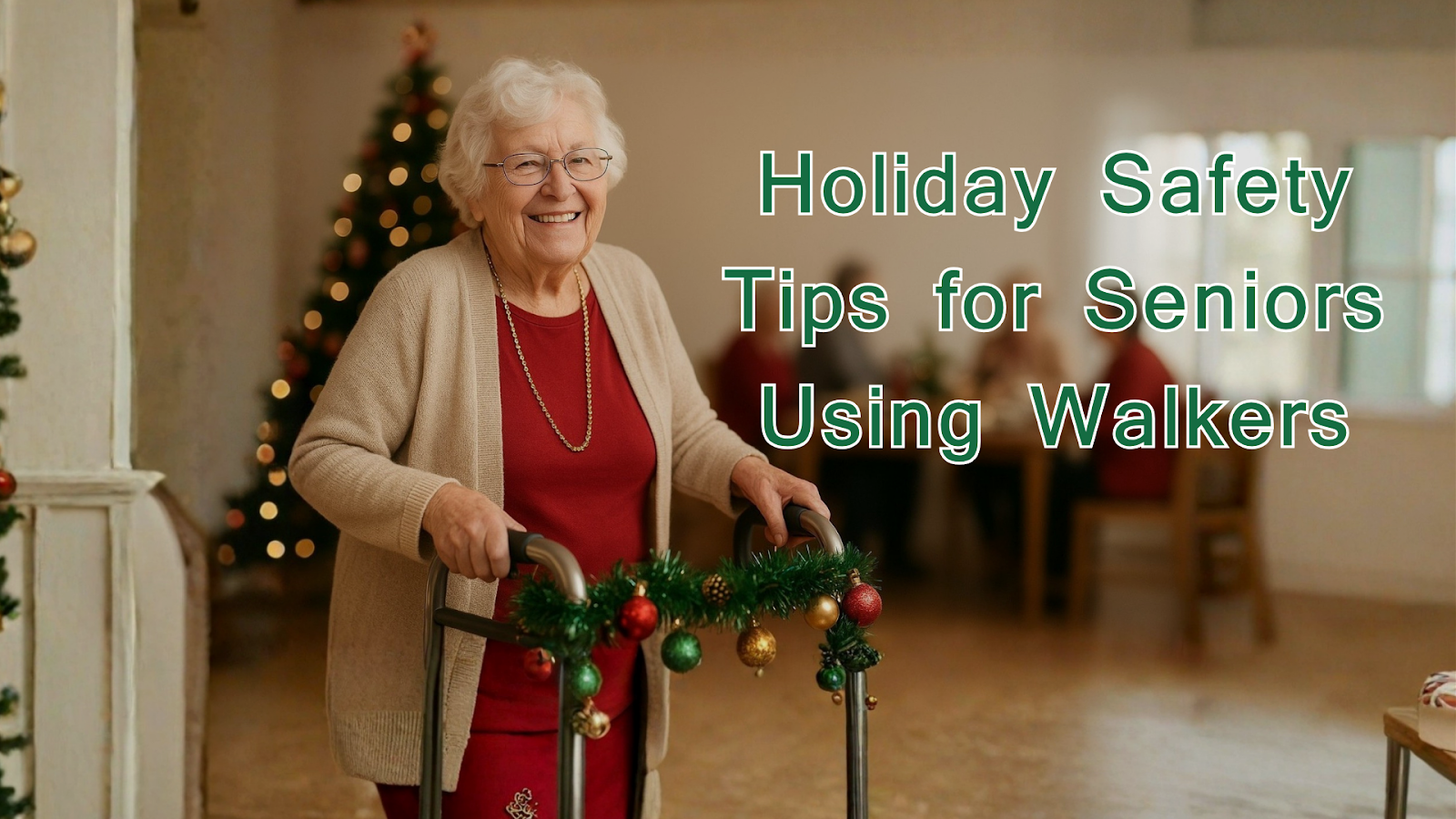
Your walker is more than a mobility aid; with a few smart upgrades, it can become a safer, more functional part of your holiday routine. Consider:
- Wrapping LED fairy lights (battery-powered) around the frame, so you and others can spot the walker easily under dim holiday lighting.
- Adding reflective tape, red/green for the season, to increase visibility, especially if guests are coming and going.
- Attaching a walker basket or tote bag: this lets you carry gifts, drinks, or personal items hands-free, reducing instability that comes from carrying items in your arms.
- Swapping standard rubber tips for ice-gripper tips or small snow-cleat attachments whenever you step outside. Experts recommend such traction aids when walking on slippery surfaces
- Installing a cup holder for hot cocoa, tea, or water, avoiding spills on carpets or floors that could lead to slips.
If family or friends plan to give practical, mobility-friendly gifts this year, they may appreciate reviewing this guide, Christmas Gift Ideas for Elderly Ladies this December 2025
3. Navigate Crowded Rooms Like a Pro
Holiday gatherings often bring dozens of friends and family members under one roof — which can turn a walker-friendly living space into a tight obstacle course. To keep your footing (literally) and dignity intact, use these practical navigation strategies:
- Arrive early during early arrival or after dessert, there’s often more space and less foot traffic, easing movement.
- Request a designated seat, ideally a stable armchair positioned near the main walking paths. A gentle sign, such as “Reserved for Grandma Hug Zone,” can help guests avoid crowding around you.
- Use your walker seat whenever you feel crowded or overwhelmed , giving yourself a safe “pause point.”
- Teach children a simple rule: “If you can’t see Grandma’s shoes, you’re too close.” This helps them intuitively keep a safe distance from the walker.
If the family plans to exchange gifts or lay out items, ask that everything be placed on a coffee table, ottoman, or tray at waist height, not on the floor. Bending or reaching down amid chaos increases fall risk significantly.
For gift ideas that support mobility and minimize clutter (especially helpful in busy homes), check out The Best Holiday Gifts for Seniors Who Have Everything, a guide that includes practical, space-conscious items designed for seniors with mobility aids
4. Safe Gift Opening & Carrying
Gifts, a major holiday joy. But for seniors using walkers, the act of carrying, bending, or picking items from the floor can pose serious risks.
To keep gift-giving safe:
- Ask the family to place all gifts on a waist‑height surface: coffee table, TV-tray, ottoman, or dining table, and avoid floor-level stacking.
- Keep a long-handled reacher/grabber tool strapped to your walker for retrieving dropped wrapping paper, bows, or small items without bending.
- Use your walker’s basket or tray to carry gifts, food, or drinks, one item at a time, to reduce imbalance.
- Sit down before opening gifts; juggling multiple packages while standing increases the risk of slips or tipping.
If gift-givers are unsure what to buy, the following guide offers mobility-friendly, senior-appropriate options, 20 Thoughtful & Inexpensive Christmas Gift Ideas for Senior Citizens Under $20, affordable, practical items perfect for stockings or small gifts.
These choices encourage thoughtful, safe gifting that supports the senior’s mobility without adding clutter or hazard.
5. Avoid Common Seasonal Traps
Holiday seasons tend to bring hazards that are easy to overlook — but for walker users, they can cause serious injuries. Common seasonal risks include:
• Wet or icy entryways
Guests coming indoors with snow or rain on their boots can leave slippery surfaces. Use absorbent mats and a boot tray at every entrance to prevent tracking water or ice inside.
• Low-hanging decorations and cords
Holiday décor, garlands, ribbons, cords, stockings, may hang low enough to snag on walker legs or wheels. Raise all decorations above 48 inches to prevent such tangles.
• Scattered toys, wrapping paper, ribbon curls
Kids and pets tend to play or wander, increasing tripping hazards. Assign a family member (teen or adult) “floor‑patrol duty” to keep walkways clear.
• Alcohol + Fatigue
Even a single drink may impair balance, and holiday fatigue exacerbates the risk. For walker users, alcohol lowers stability more than usual, so moderate drinking and frequent rests are safest.
• Overexertion and multitasking
During holiday cooking, carrying dishes, and cleaning up, many seniors try to help. But assisting for too long while tired increases fall risk. It’s safer to rest, sit, or ask for help when needed.
To further prevent falls, especially outdoors, experts recommend using footwear with good traction, ensuring handrails are in place, and avoiding rushed movements on icy surfaces.
If you want safer gift ideas, accessories, or products that help manage these seasonal hazards, the guide 16 Best Christmas Gifts for Seniors – Amazon 2025 is worth sharing with family and friends.
6. Quick Emergency Prep
Even with thorough planning, emergencies can happen. A little preparation can make all the difference:
- Keep your phone in a walker pouch or a cross-body bag, never across the room or on a high shelf.
- Wear a medical-alert bracelet or necklace, especially if you might have difficulty reaching the phone after a fall.
- Inform one trusted adult about your seating location and approximate times you’ll rest or join the group.
- When you stand after a long sit, use the “nose-over-toes” stance: lean slightly forward before lifting, then push up with your legs. This reduces dizziness and the chance of a tumble. This slow-stand technique is recommended by geriatric safety guidelines.
- Agree on a family code word (for example, “snowflake” or “holly”), a discreet signal you can use when you need steadying or assistance without creating a fuss.
Such simple measures can reduce the duration and severity of injuries, and in many cases prevent a fall from turning into a hospital visit.
Frequently Asked Questions
Are battery-powered lights on a walker safe?
Yes, as long as you use low-voltage LED lights and secure them properly so nothing dangles. Good lighting improves visibility and helps avoid accidental collisions, especially when guests move around.
How do I carry food and drinks safely at a buffet?
Use the walker tray or basket. Load items while seated, then stand and walk. Carrying plates or hot drinks in your hands dramatically increases risk, especially in crowded spaces.
Is it safe to walk outside in light snow?
Only with snow‑gripper tips or traction cleats attached to walker legs. Snow or icy patches, especially melted and refrozen ones, are often invisible but very slippery. Experts recommend slip-resistant footwear and ice grips to maintain traction.
What do I say if family puts gifts on the floor?
A friendly but firm line works best:
“My doctor says no more floor gifts, table height helps me stay safe and enjoy the party longer!”
Can I still hang stockings if I use a walker?
Absolutely, just hang them at waist height on a mantel or wall hooks. Avoid placing anything on the floor where walker legs or wheels may catch underfoot.
-
Final Thoughts
Over years of helping seniors enjoy holidays with independence, one truth stands out: the safest, most joyful celebrations are those planned with care, small help, and the right mindset.
You don’t need to prove you can do everything; safety and comfort matter more than doing it all. Prepare your home, outfit your walker, accept help when offered, pause often, and use your walker seat.
This holiday season can be bright, warm, and full of laughter, and also safe, steady, and stress‑free.
-
References
- Fall Prevention Strategies for Seniors, Caregiver Support Network, outlines the importance of good lighting and visibility to reduce fall risk. (caregiversupportnetwork.org)
- How to Prevent Elderly Falls: A Simple Guide That Could Save Lives, SeniorSite recommends removing tripping hazards (rugs, cords), clearing pathways, and improving lighting at home. (seniorsite.org)
- Tips to Prevent Falls,” Purdue Extension HHS‑829‑W, lists loose rugs, clutter, cords, dark hallways, and uneven floors as common hazards for older adults. (extension.purdue.edu)
- “Preventing Winter Falls: Safety Tips for Seniors at Home,” Crown Hospice — gives winter‑specific advice: remove rugs, keep floors dry, improve lighting, choose proper footwear. (crownhospice.com)
- Older Adults Falls & Slips, Home Safety Guide Fall Prevention Foundation emphasizes home-wide safety measures: good lighting, clear walkways, slip‑resistant flooring, secure rugs, handrails, and on‑slip mats. (fallpreventionfoundation.org)
- Fall Prevention for Seniors – Expert Tips for Home Safety,AllHeartCare recommends installing grab bars and handrails, securing rugs and cords, installing proper lighting, and maintaining safe flooring to prevent falls. (allheartcare.com)
- Making the World Safer for Aging Adults,” SeniorLiving.org, includes advice for safe walker use, traction/ice grips for winter, and careful path planning to avoid falls outdoors. (seniorliving.org)

Hi – These safety tips should be also be for other things not only holiday season, do you have any such articles