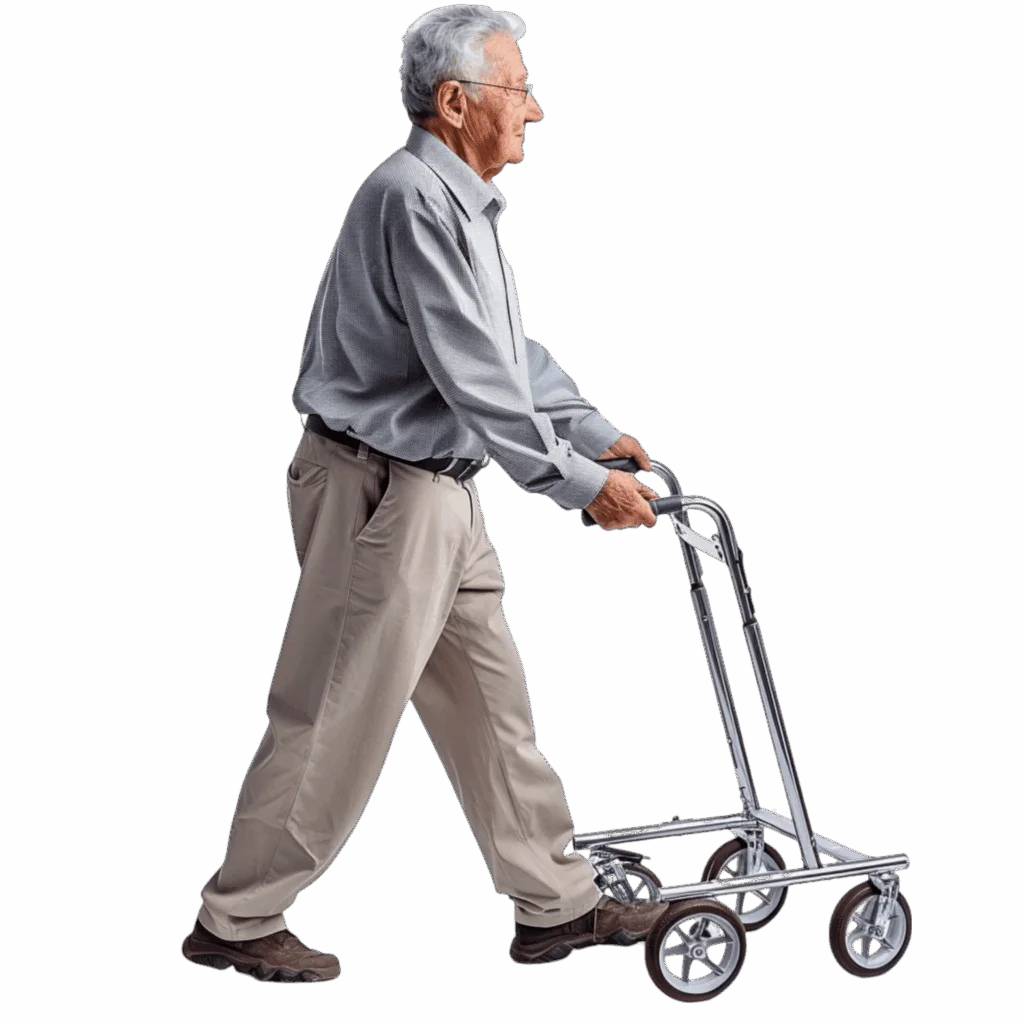
Outdoor terrain type
Terrain affects wheel size, frame strength, brakes, and overall stability. Paved paths need less support, while grass, gravel, trails, or sand call for larger wheels and reinforced frames.

Answer seven targeted questions about terrain, distance, rest breaks, storage, budget, and outdoor safety. The tool narrows the choice to a walker that fits real-world outdoor mobility.
Step 1 of 7
Terrain
What type of outdoor terrain will you primarily use the walker on?
The tool evaluates seven key factors that affect outdoor mobility, safety, comfort, and durability.
Terrain affects wheel size, frame strength, brakes, and overall stability. Paved paths need less support, while grass, gravel, trails, or sand call for larger wheels and reinforced frames.
Short walks may only need basic outdoor support. Longer walks benefit from ergonomic grips, smoother rolling wheels, seating, and fatigue-reducing comfort.
Padded seats, backrests, and locking brakes give seniors a safer way to pause outdoors without depending on benches or nearby seating.
Exercise, errands, leisure, dog walking, social visits, and medical recovery each point toward different balances of storage, comfort, stability, and maneuverability.
Personal items, groceries, supplies, pet gear, or medical equipment can change the safest choice. Storage should stay secure so the walker remains balanced.
Outdoor walkers range from basic paved-path models to premium all-terrain options with stronger brakes, suspension-style wheels, and more comfort.
Outdoor walkers face uneven ground, weather, slopes, and longer distances, so small details matter before daily use.
Stay informed with our monthly updates on the best mobility aids, safety tips, and exclusive deals designed to support senior independence.