
Syed Ali
Key Summary
Proper walking shoes are essential for seniors because they directly impact balance, joint protection, posture, and fall prevention. Age-related changes in muscle strength, foot structure, and coordination make supportive footwear a necessity rather than a preference.
Shoes designed for stability, cushioning, and proper alignment can significantly reduce injury risk while preserving mobility and independence.
- A simple walk to the mailbox.
- A stroll in the park.
- Moving from the bedroom to the kitchen.
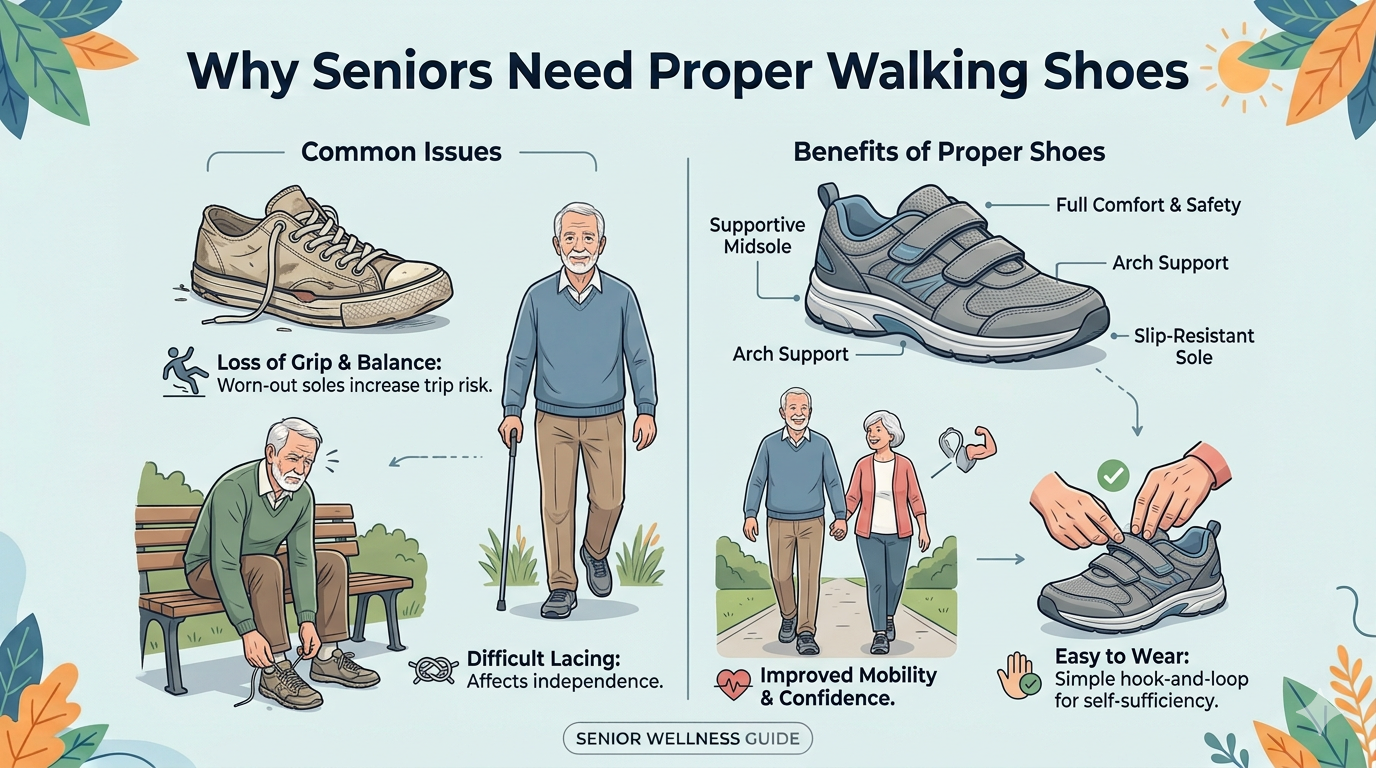
For many older adults, these everyday movements carry more risk than most people realize. Falls remain one of the leading causes of injury among seniors, and while we often blame poor balance or weak muscles, one overlooked factor sits right at ground level: footwear.
The wrong shoes can quietly contribute to instability, knee pain, back strain, and even long-term declines in mobility. On the other hand, supportive, well-designed walking shoes can dramatically improve comfort, posture, and confidence.
This guide explains exactly why seniors need proper walking shoes, what happens when they don’t have them, and how to choose footwear that supports long-term mobility and independence.
Table of Contents
Balance Changes With Age — Shoes Must Compensate
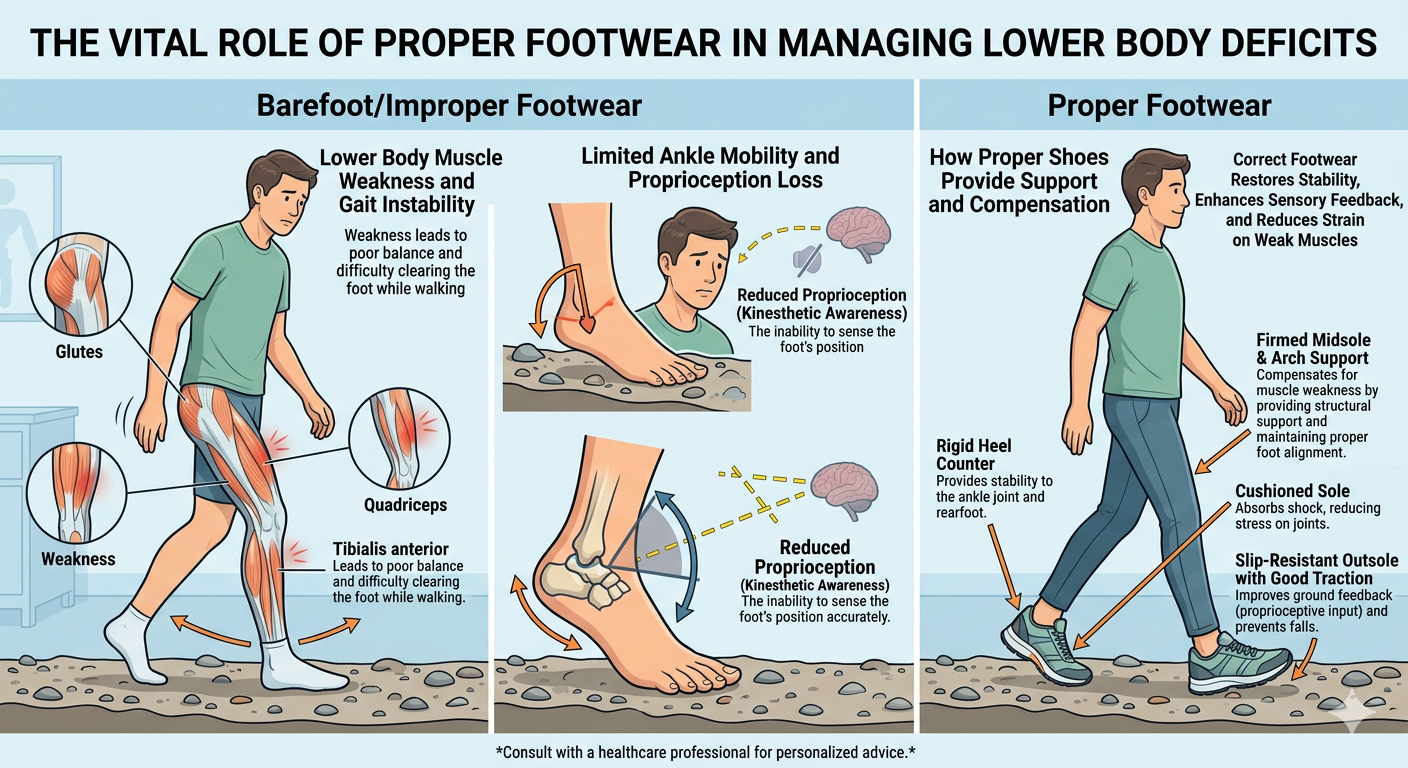
As we age, several physiological changes affect stability:
Reduced muscle strength in the lower body
Slower reflexes
Decreased ankle mobility
Loss of fat padding under the feet
Changes in proprioception (body awareness)
These factors increase fall risk. Shoes that lack structure or cushioning can make the problem worse.
What Proper Walking Shoes Do:
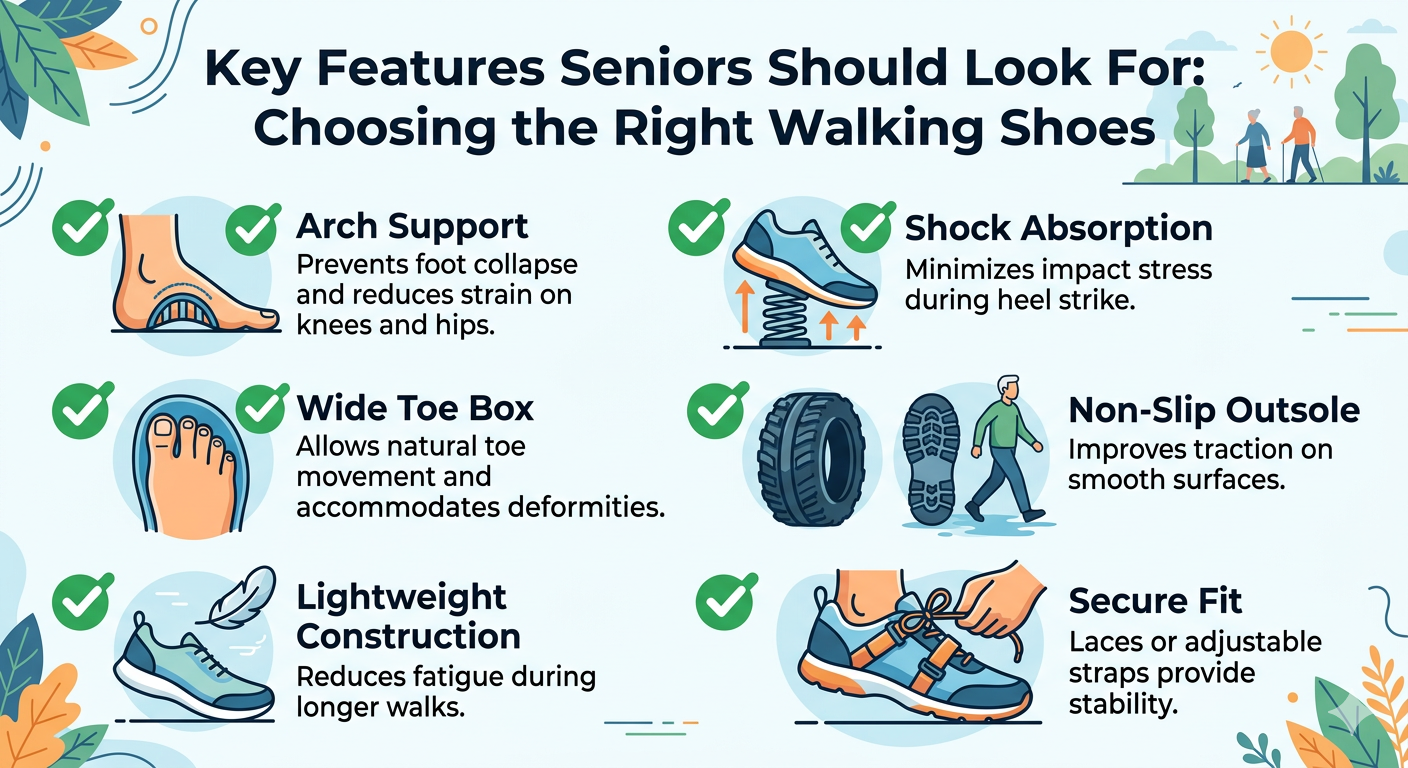
Provide a stable, wide base of support
Offer firm heel counters to prevent wobbling
Reduce foot fatigue that compromises balance
Improve ground contact awareness
When footwear supports alignment and stability, the body doesn’t need to overcompensate with strained muscles and awkward posture.
Joint Protection Becomes Critical After 60
Cartilage naturally wears down over time. Many seniors experience:
- Osteoarthritis
- Knee pain
- Hip discomfort
- Lower back stiffness
- Plantar fasciitis
Walking without proper shock absorption increases stress on these joints. Each step sends impact force upward through the ankle, knee, hip, and spine.
Why Cushioning Matters
High-quality walking shoes absorb and disperse impact energy. This reduces:
- Micro-trauma to joints
- Inflammation
- Long-term wear on cartilage
If you’ve explored options in the best walking shoes for seniors category, you’ll notice that top-rated pairs emphasize cushioning, arch support, and midsole technology specifically designed to reduce joint strain.
Fall Prevention Starts From the Ground Up
According to global health data, falls are among the most common causes of injury-related hospitalizations in older adults. Many of these falls are preventable.
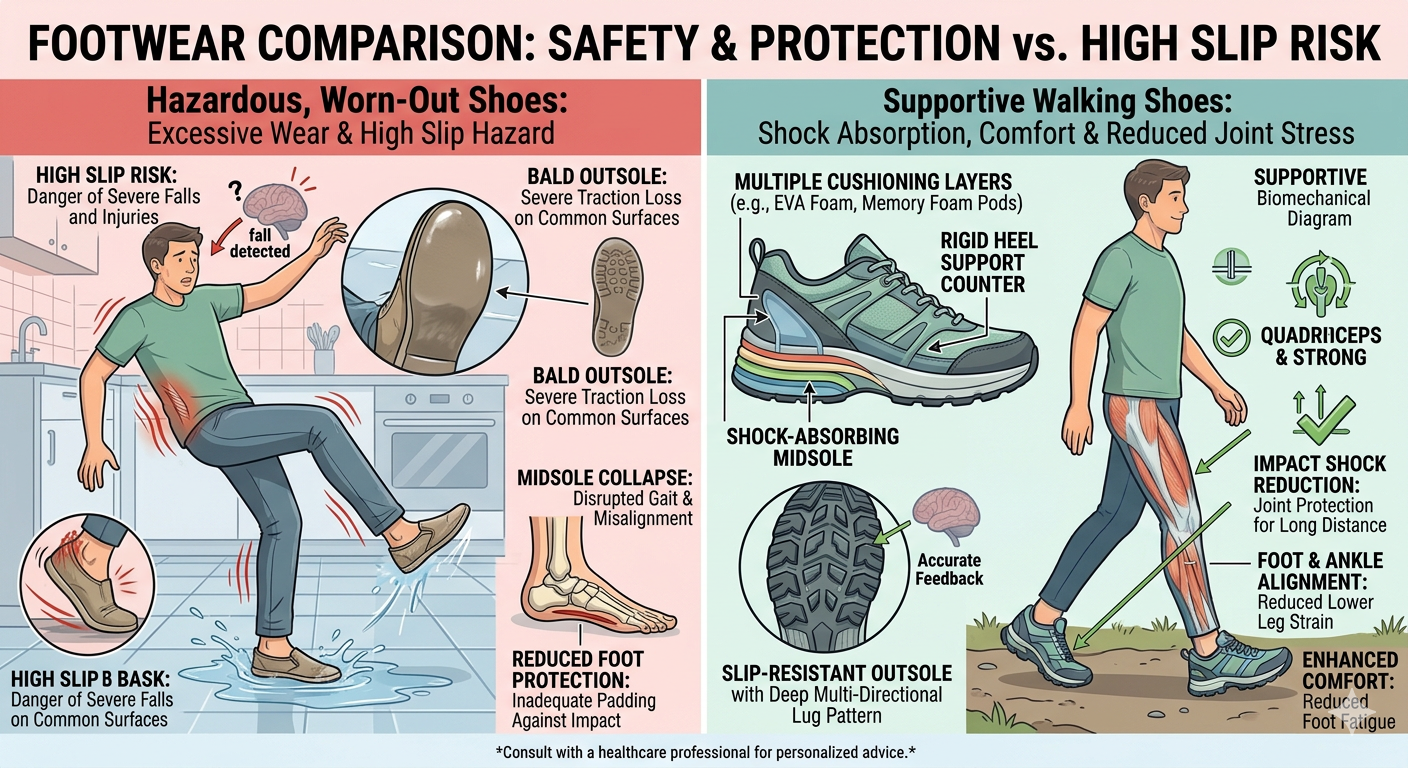
Common Footwear Mistakes That Increase Fall Risk:
- Smooth, slippery soles
- Worn-out tread
- Loose slip-on shoes
- High heels or elevated platforms
- Shoes that are too tight or too loose
Features That Reduce Fall Risk:
- Non-slip rubber outsoles
- Wide toe box for natural toe splay
- Low heel-to-toe drop
- Secure lacing or adjustable straps
- Firm but flexible sole
Proper Shoes Improve Posture and Alignment
Footwear affects the entire kinetic chain, from the ground to the spine.
When shoes lack arch support or have collapsed midsoles, they can cause:
- Overpronation (feet rolling inward)
- Uneven weight distribution
- Knee misalignment
- Hip rotation
- Lower back strain
Over time, poor alignment leads to chronic discomfort.
Walking shoes built with structured arch support and a stable heel platform promote neutral alignment. This helps maintain:
- Better posture
- Reduced back pain
- Even pressure distribution
- Improved walking efficiency
For seniors who already experience back or hip pain, the right footwear can make a noticeable difference within days.
Foot Conditions Become More Common With Age
Aging feet undergo structural changes. Seniors are more likely to develop:
- Bunions
- Hammertoes
- Corns and calluses
- Swelling (edema)
- Diabetic neuropathy
Improper shoes can aggravate these conditions.
Why Specialized Walking Shoes Help:
- Extra depth prevents pressure on deformities
- Soft linings reduce friction
- Wide widths accommodate swelling
- Breathable materials prevent moisture buildup
- Shock-absorbing midsoles reduce nerve stress
What Happens When Seniors Wear the Wrong Shoes?
The consequences are gradual but serious:
- Increased fall risk
- Faster joint degeneration
- Worsening foot deformities
- Chronic lower back pain
- Reduced walking endurance
Many seniors unknowingly wear outdated athletic shoes with worn-out cushioning. Most walking shoes lose structural integrity long before they look damaged.
Experts generally recommend replacing walking shoes every 300–500 miles or when cushioning feels compressed.
Walking Shoes vs. Regular Sneakers
Walking Shoes | Regular Sneakers |
1.Specifically engineered for repetitive heel-to-toe walking motion | Designed for general wear, fashion, or multi-purpose activities |
2. Firm, structured midsoles for stability and motion control | Cushioning varies; it may be too soft or lack structural support |
3. Strong heel counter for rearfoot stability | Heel support may be softer or minimally reinforced |
4. Flexes mainly at the ball of the foot for a natural stride | May bend in the middle or multiple areas |
5. Enhanced shock absorption for long-distance walking | Shock absorption depends on style; not always optimized |
6. Slip-resistant outsole designed for pavement and indoor floors | Traction varies; some prioritize style over grip |
7. Lightweight to reduce fatigue during extended wear | Can be heavier, especially lifestyle or bulky designs |
8. Focused on biomechanics, balance, and joint protection | Often prioritize appearance and trend over foot mechanics |
Frequently Asked Questions
Do seniors really need special walking shoes?
Yes. Aging feet and joints require enhanced support, cushioning, and stability that regular sneakers often don’t provide.
Can proper walking shoes reduce knee pain?
Yes. Shock-absorbing midsoles and proper alignment reduce stress on the knees and hips.
Are slip-on shoes safe for seniors?
Only if they provide a secure fit and traction. Loose slip-ons without grip increase fall risk.
How tight should walking shoes be?
They should feel snug but not tight. There should be about a thumb’s width of space at the front of the toe box.
-
Final Thoughts
Proper walking shoes are not a luxury for seniors; they are a necessity.
They protect joints.
They prevent falls.
They improve posture.
They reduce pain.
They preserve independence.
As the body changes with age, footwear must evolve accordingly. Investing in supportive walking shoes is one of the simplest yet most impactful decisions an older adult can make for long-term mobility and safety.
-
References
- Centers for Disease Control and Prevention – Data on falls as a leading cause of injury among older adults
- National Institute on Aging – Research on mobility decline and aging-related balance changes
- American Podiatric Medical Association – Clinical guidance on supportive footwear and foot health
- American Academy of Orthopaedic Surgeons – Information on joint stress, biomechanics, and walking mechanics
- World Health Organization – Global statistics on fall-related injuries in older populations