
Robin Dolan
Key Summary
The best wheel size for a walker depends on where and how it’s used. For indoor mobility, 6–8-inch wheels work well, while 8–12-inch wheels are ideal for outdoor or uneven terrain. Larger wheels improve stability, while smaller ones offer better maneuverability indoors. Choosing the right size can greatly impact safety, comfort, and ease of use.Many caregivers or older adults unknowingly purchase a walker with incorrectly sized wheels, which affects comfort, safety, and usability. One-size-fits-all? Not exactly. There is nothing that is not a safety hazard when you have a poorly fitted wheel on a great walker. Think pushing a small-wheeled walker along cobblestone streets or through sidewalks with cracks—it is frustrating to say the least, and it is unsafe for older adults with a tendency to fall. Conversely, having oversized wheels indoors is cumbersome, overwhelming, and downright unsafe in tight areas.
This guide clears up the confusion. We’ll dissect the optimum wheel sizes for various needs, surfaces, and conditions of users—indoor navigating, outdoor wheelchair walking, or advanced mobility requirements. At the end, you’ll be able to choose the optimal wheel size for comfort and safety.
Table of Contents
Why Does Walker Wheel Size Matters?
Walker wheels are not merely add-ons; they have a direct impact on mobility, control, and safety. The larger the wheels, the greater the ease of rolling over rough terrain. Smaller wheels, on the other hand, are more suitable for navigating small spaces such as homes or corridors. A size disparity between wheels and terrain may cause instability, friction, or a greater fall hazard.
Also, how important the size of the wheels is will depend on the kind of walker (2-wheel, 3-wheel, 4-wheel, or rollator). Those with arthritis, hip ailments, or a loss of balance are usually best off with larger, shock-assisted wheels that take pressure off the joints.
For example, larger diameter wheels can climb over obstacles more effectively, which is critical for outdoor use where curbs and uneven pavements are common. Additionally, users with arthritis or balance issues benefit from larger, shock-absorbing wheels that reduce joint strain and improve stability.
If you’re wondering whether it’s time to move from a cane to a walker, check out our guide on how you know it is time to start using a walker instead of a cane.
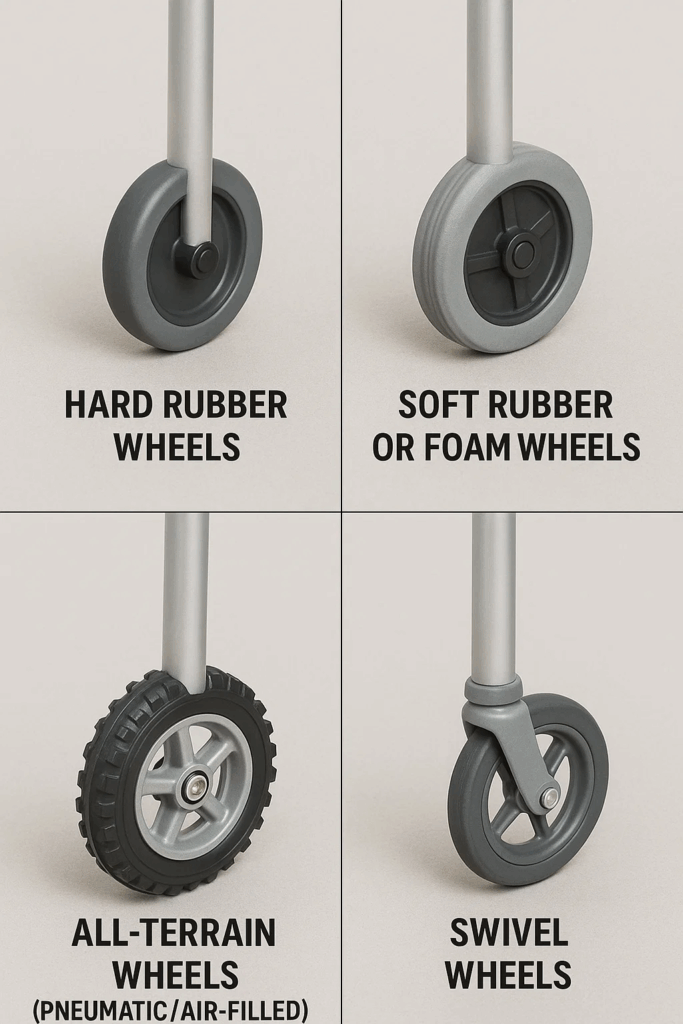
Walker Wheel Types Described
If you’re shopping for increased maneuverability, check out our review of the Best 3-wheel walkers for seniorsUnderstanding wheel types is key before selecting a size. Here are the most common:
1. Hard Rubber Wheels
- Common for indoor walkers.
- Durable, less flexible.
- Best suited for smooth floors like hardwood or tile.
2. Soft Rubber or Foam Wheels
- Slightly cushioned for comfort.
- More traction on varied surfaces.
- Ideal for indoor/outdoor hybrids.
3. All-Terrain Wheels (Pneumatic/Air-Filled)
- Best for outdoor use.
- Shock absorption for uneven ground.
- Typically ranging from 10 to 12 inches in diameter, providing superior performance on rough terrain.
4. Swivel Wheels
- Allow turning without lifting the walker.
- Usually found on front legs.
- Excellent for maneuvering in tight spaces.
Ideal Wheel Sizes for Various Applications
Selecting the correct size is about matching it to your surroundings and mobility needs:
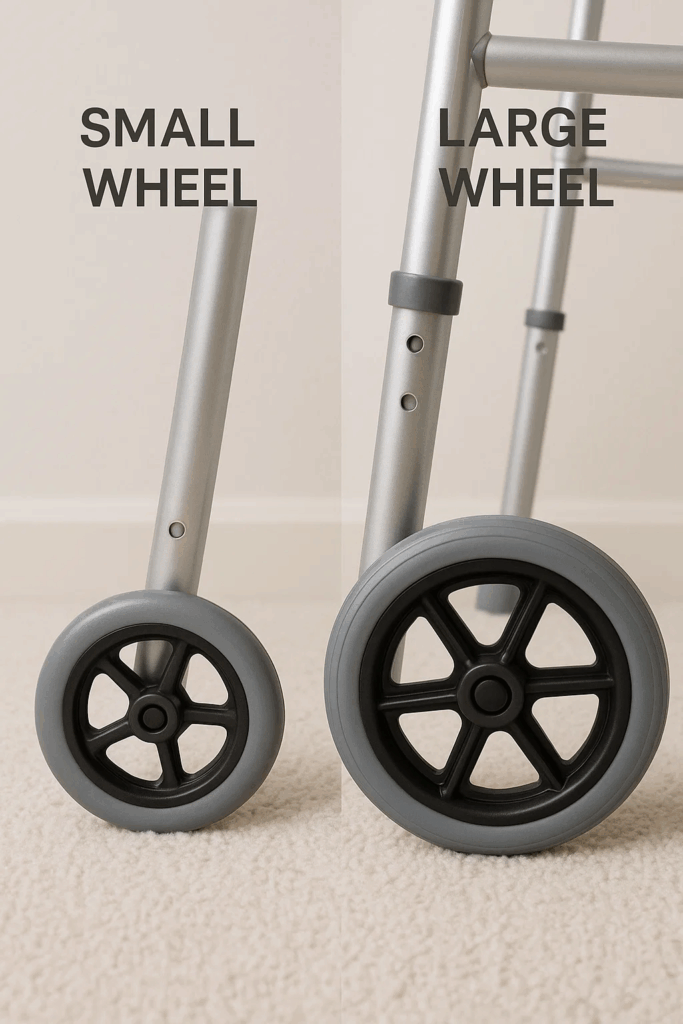
6- to 7-Inch Wheels
- Ideal for: Small homes, indoor applications, and slim corridors.
- Advantages: Lightweight, agile, best for frail users.
- Disadvantages: Not good on grass, gravel, or rough ground.
8- to 10-Inch Wheels
- Recommended for: Mixed use (indoor and outdoor) for moderate mobility needs.
- Advantages: Versatile, improved control on smaller outdoor surfaces.
- Disadvantages: A bit bulkier
10- to 12-Inch Wheels
- Ideal for: rough terrain, outdoor users, and people with arthritis.
- Advantages: Great shock absorption, lower resistance.
- Disadvantages: More weight, more strength needed in tight spaces.
Small vs Medium vs Large Wheels
|
Wheel Size
|
Best Use Case
|
Maneuverability
|
Stability
|
Terrain Performance
|
|---|---|---|---|---|
|
6-7 inches
|
Indoor/Narrow spaces
|
High
|
Moderate
|
Low
|
|
8-10 inches
|
Indoor + outdoor
|
Moderate
|
High
|
Moderate
|
|
10-12 inches
|
Outdoor/Uneven terrain
|
Lower
|
Very high
|
Excellent
|
For instance, 8- to 10-inch wheels strike a balance between indoor agility and outdoor capability, making them a popular choice for users who need flexibility in various environments.
Factors to Consider When Choosing Wheel Size
Before selecting your wheels, take note of the following important issues:
- Level of Mobility — Those with limited strength will find smaller, lighter wheels preferable.
- Terrain — Are you primarily indoors, on sidewalks, or in green parks?
- Walker Type — Not every walker accommodates bigger wheels. Always check for compatibility.
- Storage and Portability—Bigger wheels are more difficult to move in cars.
- Medical Requirements — Arthritis, balance, or chronic fatigue may necessitate added stability, and therefore, larger wheels are safer.
If balance is your key concern, we suggest reviewing the Safest Walkers for Seniors
Frequently Asked Questions
Are larger wheels preferable in outdoor applications?
Indeed. Bigger wheels (10–12 inches) are suited for use in the outdoors since they cope with cracks, gravel, and bumps more effectively than smaller wheels.
Is it possible to upgrade the wheels on my existing walker?
Occasionally. Refer to manufacturer instructions. Certain models allow for upgrading wheels.
Are materials for wheels important?
Yes. Hard rubber is tough and not as shock-reducing. Pneumatic or soft wheels give a softer ride over rough ground.
Are smaller or larger wheels preferable for stability?
Greater stability and less jarring are provided by large wheels, which make them a more secure option for users with equilibrium issues.
What is the most suitable walking stick for an older lady with poor balance?
If you’re not ready for a walker, check out our guide for the top walking stick for an elderly woman with a balance problem.
-
Final Thoughts
When it comes to mobility aids, wheel size is not just a detail—it’s a deal breaker. Choosing the wrong size can cause frustration, discomfort, and even danger. The right wheels will offer smooth movement, optimal stability, and improved quality of life. Always consider where you’ll use your walker most and your physical limitations.
Whether you’re shopping for yourself or a loved one, don’t overlook this critical feature. The right wheel size can make all the difference between mobility and immobility.
-
Reference
1. The Effect of Wheel Size on Mobility Performance in Wheelchair Athletes
2. Walkers https://www.physio-pedia.com/Walkers
What are the advantages of an all-terrain rollator? https://www.trionic.us/en/knowledge/204/what-are-the-advantages-of-an-all-terrain-rollator
3. Effect of ambulatory mobility aid devices on cardiovascular parameters… ..https://journals.sagepub.com/doi/full/10.1177/20503121241262250
4. Assistive Walking Device Use and Knee Osteoarthritis: the Health, Aging, and Body Composition Study