

Robin Dolan
Key Summary
An elderly person should upgrade from a cane to a walker when balance issues, frequent stumbles, or fatigue while walking indicate that a cane no longer provides adequate support. If there’s increased reliance on furniture, trouble standing, or fear of falling, a walker offers better stability. Consulting healthcare professionals ensures a safe transition. Early action helps prevent injuries and boosts confidence.Elders, as they get older, often require canes for support and balance due to mobility concerns. However, with time, leaning on such a cane will no longer suffice, thus increasing the risk of falls and injury. Senior citizens and caregivers hesitate to embrace the use of walkers, as they fear loss of independence or are unaware of signs requiring greater needs. Alas, delaying may create unsafe scenarios.
So that elders may move about with confidence and security, we will outline here the key signs when it is wise to transition from a cane to a walker in this article. Professional tips will also consider selecting an optimal model and lifting it with care. A mix of shorter and easier sentences with interspersions of longer and more complicated ones is used to create an optimal balance of perplexity and burstiness.
Table of Contents
Signs a Cane Is No Longer Enough
It can be difficult to recognize when a loved one needs more than just a cane for support, but some clear warning signs should not be ignored. One of the most significant indicators is when walking even short distances becomes a struggle. If your loved one frequently veers to one side while walking, grips their cane with excessive force, or appears increasingly unsteady, it may be time to reassess their mobility needs.
Other red flags include repeated stumbling, noticeable loss of coordination, or feeling abnormally fatigued after a brief walk. If they find themselves constantly reaching for walls or furniture to stay balanced, their current mobility aid may no longer be sufficient.
The transition from sitting to standing is another common challenge for individuals with reduced mobility. When someone has trouble getting out of a chair or frequently requires assistance, a walker for seniors may provide the extra stability and independence they need. Waiting too long to make the switch can increase the risk of falls, potentially leading to hospitalization or more severe injuries.
Don’t delay if these signs sound familiar. Upgrading to a more supportive mobility aid, such as an upright walker, can restore your loved one’s sense of confidence both at home and outdoors.
Common Signs It’s Time to Transition to a Walker:
- Despite their cane, they often stumble or trip.
- For stability, they depend on counters, walls, or pieces of furniture.
- Their legs become tired or aching after short walks.
- They have difficulty sitting or getting up by themselves.
- They avoid going out socially and taking walks because they are afraid they will fall.
- It is very hard to balance on uneven terrains such as gravel or grass.
For further information, refer to our guide: How Caregivers Can Help Seniors Select and Use Walkers.
Benefits of Using a Walker Instead
Upgrading to a walker does more than provide greater stability—it gives way to renewed confidence, freedom, and autonomy. Walkers are engineered to shift weight more evenly and give four points of support against the ground, greatly lowering fall risk. This is particularly critical for elderly individuals suffering from arthritis, balance disorders, or post-surgery conditions.
According to research published in The Gerontologist, 75% of older people who fell were not using their cane or walker at the time, underscoring the vital role that ongoing use plays in avoiding injury (Luz et al., 2017). Walkers have features such as breaks, seats, or bins built into them that make them more manageable and less physically demanding. Better posture support is also an oft-overlooked advantage—walkers assist in walking upright, minimizing back and joint strain.
Benefits of walkers:
- Improved weight distribution and balance
- Decreased risk of injury and falls
- Added seats, brakes, and storage features
- Encourages improved posture
- Boosts endurance for longer walks
- Fosters independence and confidence
To learn more, explore our post on the best rollator for balance problems.
Types of Walkers and Their Features
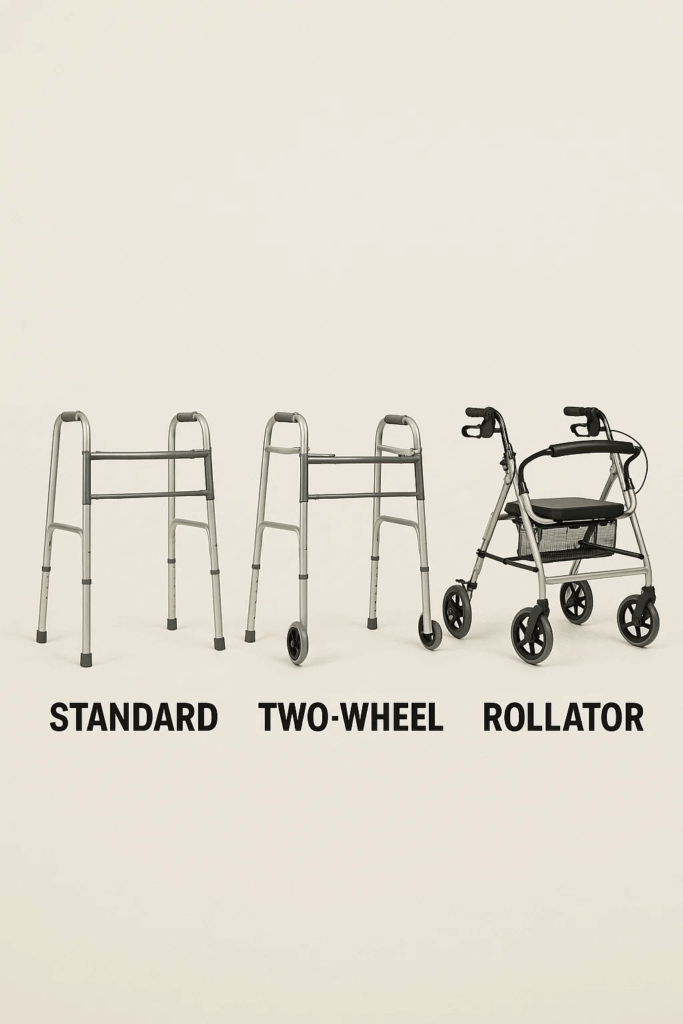
There is no single size that fits all when it comes to walkers. Each has a different use, depending on how much assistance a person requires. The most popular options are basic walkers, two-wheel walkers, and rollators.
The most stable is a basic walker, but it must be raised with every step, and this can become laborious very quickly.
Two-wheelers are a little less difficult to handle, as there are little wheels at the front, and you don’t have to lift them with every step.
Rollators have four wheels, hand brakes, and a seat. They’re excellent for people with reasonable balance and strength.
If you are considering options for a walker with better mobility and support, check out our article on the Best 3-Wheel Walkers for Seniors for a list of highly recommended choices.
|
Walker Type
|
Stability
|
Mobility
|
Features
|
Best For
|
|---|---|---|---|---|
|
Standard Walker
|
High
|
Low
|
No wheels, basic support
|
Those with major balance issues
|
|
Two wheel walker
|
Moderate
|
Moderate
|
Front wheels, easy to push
|
Seniors needing partial assistance
|
|
Rollator walker
|
low
|
high
|
4 wheels, brakes, seat, basket
|
Active seniors needing mobility
|
To learn more about essential safety features, read our post: What Safety Features Do Walkers for Seniors Typically Have?
Medical and Professional Recommendations
For making that determination, healthcare professionals are generally the best source. Physical and occupational therapists, as well as geriatric physicians, administer quick and simple tests to examine how effectively an individual can walk, balance, and move. The Timed Up and Go (TUG) test or a routine gait test helps determine whether additional support is necessary.
They will also consider such health conditions as Parkinson’s, stroke recovery, or joint disorders that compromise stability. Taking their word for it will assist you in making better, wiser decisions regarding mobility assistance.
Psychological and Social Considerations
Transitioning from a cane to a walker is not only a physical transition it is also an emotional one. Seniors often perceive moving to a walker as a loss of independence, and this can create resistance. By phrasing it as a method to prolong independence rather than curtail it, though, can help empower. Open communication with caregivers, addressing concerns, and validating them is key.
Socially, using a walker can promote greater community activity by restoring confidence. A senior may feel able to visit with friends, shop, or attend activities once provided with a walker. Support from caregivers and positive reinforcement by supportive others can do much to promote acceptance.”
How to Transition Smoothly from Cane to Walker
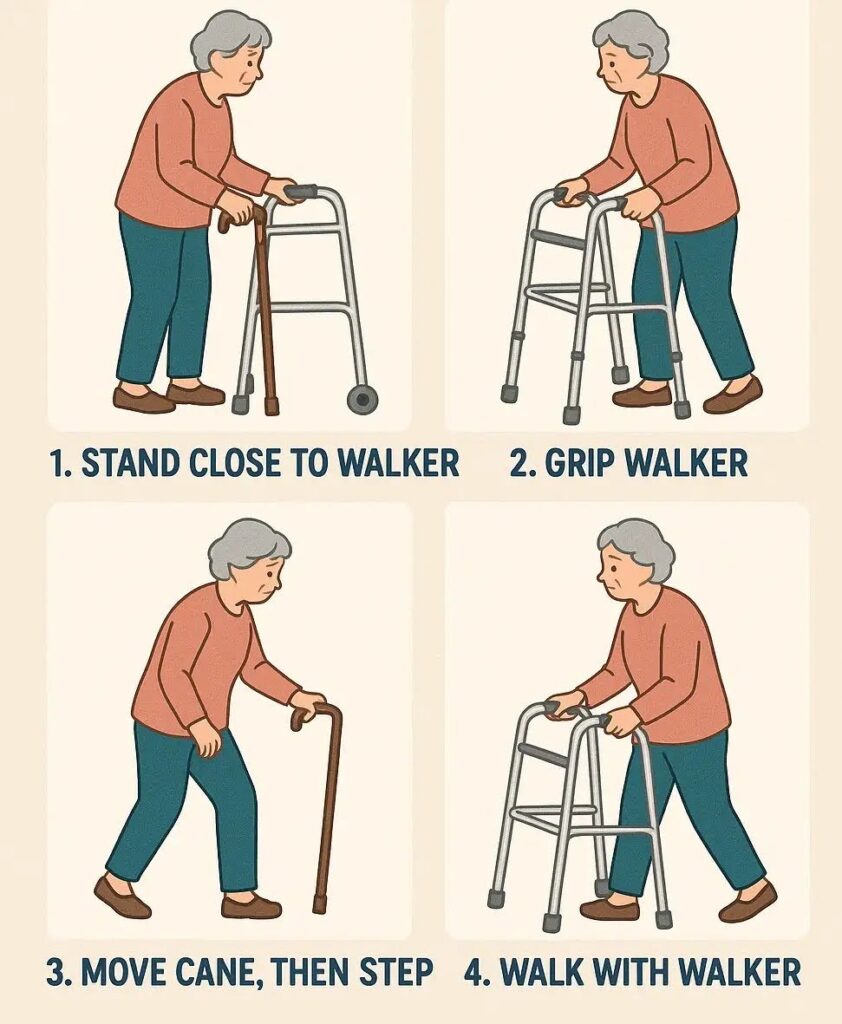
The transition is made smooth through preparation, training, and support. Begin by seeing a physical therapist to decide on a proper walker and teaching correct use techniques. Ease into the use of the walker—start on flat surfaces at home, then progress outdoors. Be aware of obstacles such as area rugs or stairs, and adapt the environment to minimize hazards.
Integrating the use of a walker into physical therapy will also assist in building strength and coordination. Encourage frequent use and promote a positive spin towards adopting the new mobility aid. Keep caregivers and relatives involved and educated on how to assist without becoming intrusive.
Choosing the Right Walker for Your Needs
- Choose a walker that suits your physical condition, mobility level, and physician’s recommendation
- Light walkers are best suited for lighter lifting and conveyance
- Padded seats ensure comfort for users who require frequent testing
- Big wheels excel on rugged terrain and rougher surfaces
- Consider whether the walker will be utilized in indoor, outdoor, or both environments
- Assess the activities that will need to be supported by the walker, e.g., walking, shopping, or sitting
- Search for options such as adjustable height to fit your frame
- Make sure the grips are comfortable and minimize stress on the hands
- Folding mechanisms aid in storing and transporting
- Locking brakes and robust frames are vital safety features
- Try out various models and observe what feels most natural and supportive to you
- Obtain referrals from a physical therapist or physician.
If you’re looking for highly rated walker options that offer a balance of support and style, consider exploring the Highest Rated Walkers for Seniors to find a model that best fits your needs.
Common Mistakes to Avoid When Upgrading
- Skipping consultation with a healthcare provider when switching to a walker. A University at Buffalo study discovered that 57% of walker-related issues were difficult or hazardous, highlighting how crucial it is to get professionals involved in choosing and preparing one. Few users reported stigma, illustrating that function and safety should always come first.
- Selecting a walker that is not compatible with the amount of needed support
- Using an improperly adjusted height setting on a walker, resulting in a strained posture
- Not adjusting the handle to fit arm length and hand placement
- Forgetting to engage the brakes on a rollator when sitting or getting up
- Depending on the walker outside first before training inside
- Placing one’s full weight on the walker when standing still, at risk for imbalance
- Carrying heavy loads without a proper basket for storing them
- Using a walker without adult supervision or instruction initially
- Failure to inspect wheels or components periodically for wear and tear
- Assuming all walkers are identical without ever knowing about features
- Not considering terrain suitability, which can restrict safe outdoor use”.
Frequently Asked Questions
Can I use both a cane and a walker depending on the situation?
Yes, but only if a healthcare provider approves. Walkers offer more support and are typically used when canes are no longer adequate.
Do I need a prescription for a walker?
Not necessarily, but getting one through a healthcare provider may help with insurance reimbursement.
When to switch from a cane to a walker?
One of the first signs you should start using a walker instead of your cane is when it becomes difficult to balance on one leg. You may also consider switching if you have struggles with strength, balance, and endurance.
How do I know what walker size is right for me?
Your arms should bend at about 15 degrees when holding the handles. A physical therapist can ensure proper fitting.
When should the elderly start using a walker?
If you feel unsteady, hold furniture, counters, or walls when you walk, or have had any falls or near falls, it might be time to consider using an assistive device such as a cane or walker.
Will Medicare or insurance cover the cost of a walker?
In many cases, yes. Check with your insurance provider or Medicare for eligibility and requirements.
When to stop using a cane?
The best time to stop using your walking cane is when you have stopped limping and no longer have pain without it. Waiting until this time before doing away with the stick will give the injured leg the proper strength required to carry you effortlessly and painlessly
-
Final Thoughts
Transitioning from a cane to a walker is a huge step physically as well as emotionally, but usually one that is needed in order to maintain independence and security. Identifying signs early on and making an educated, supported choice can avoid falls, injury, and loneliness.
Seniors can rebuild confidence and regain mobility with proper guidance and equipment. Invest some time in evaluating, consulting, and planning for a safe future.
-
Reference
- Kaye, H.S., Kang, T., & LaPlante, M.P. (2000). An Analysis of Problems with Walkers Encountered by Elderly Persons. Assistive Technology, 12(2), 125-140. https://www.tandfonline.com/doi/abs/10.1080/J148v13n01_01
- Luz, C.C., et al. (2017). Do Canes or Walkers Make Any Difference? Nonuse and Fall Injuries among Elderly. The Gerontologist.
https://academic.oup.com/gerontologist/article-abstract/57/2/211/2631943